Japanese

 Outline History  Member Output Project Contact

----------------------------- Topics -----------------------------
 
"Kyoto Semiconductor Co-creation Lab" of Kyoto Institute of Technology has been established on April 1, 2026. 

Two missions of "Kyoto Semiconductor Co-creation Lab"
 1) JST Moonshot Goal 6: "Development of Scalable Highly Integrated Quantum Bit Error Correction System"
 2) "Semiconductor Human Resource Development" according to "Establishment of a Co-creation Hub for Semiconductor Human Resource Development in Kansai Area" by Ministry of Education, Culture, Sports, Science and Technology.


Outline

 The research and development theme "Development of Scalable Highly Integrated Quantum Bit Error Correction System", which objects the practical application of quantum computers, proposed by Professor Kazuyoshi Kobayashi, director of the Kyoto Semiconductor Co-creation Lab, was accepted as Moonshot Goal 6 by the Japan Science and Technology Agency (JST) in fiscal year 2022. Professor Kazuyoshi Kobayashi is in charged the Project Manager, and our lab. has been promoting the research on classical electronics (integrated circuits) for controlling and error-correction of quantum computers.
 
On the other hand, a proposal for semiconductor human resource development involving Osaka University, Kyoto University, Kobe University, Osaka Metropolitan University and our university -- 5 major national and public universities in the Kansai region --, was actcepted for the Ministry of Education.
In the Kyoto Semiconductor Co-creation Lab, we are working in collaboration with other universities, technical colleges, local governments, consortia, and industry to promote the development of "Development of Scalable Highly Integrated Quantum Bit Error Correction System", utilizing semiconductor circuit technology, as outlined in Moonshot Goal 6. And we perform education aimed at developing semiconductor human resources to establish a co-creation hub for semiconductor human resource development in the Kansai region.


History

  Green-innovation Center of Kyoto Institute of Technology (KIT) was founded to develop the results of "highly efficient energy utilization" and participates in the "Kyoto Next Generation Energy System Creation Strategy" being promoted in the Kyoto region in 2015. The center was reorganized as Green-innovation Lab in 2018 as part of the efforts to strengthen research capabilities and industry-academia collaboration. Green Innovation Lab is a research center that integrates researchers, proposes new power control systems that integrates power electronics and advanced communication functions, and develops prototypes. It has become a center for promoting research and development in the field of green innovation in the university's functional enhancement projects. In 2022, with the aim of further strengthening our research capabilities, we established the Monozukuri Education and Research Center (MERC). In 2022, Kyoto Lab for a Greener Future was established by integrating the research fields of the Monozukuri Education and Research Center (now Monozukuri Unit of Open Facility Center) to further strengthen research capabilities.
  As described in Overview, "Kyoto Lab for a Greener Future" has been reborn as the new "Kyoto Lab for a Greener Future." "Kyoto Lab for a Greener Future" focuses on quantum computers, with the main mission being to promote research on the Moonshot (MS) Goal 6, "Development of a scalable highly integrated quantum error correction system" from April 1, 2025 .

  Furthermore, from April 2026, we have taken over the mission of "Development of Scalable Highly Integrated Quantum
Bit Error Correction System" utilizing semiconductor circuit technology, which is the theme of the original JST Moonshot Goal 6. On the other hand, in September 2025, the Ministry of Education, Culture, Sports, Science and Technology announced the "Establishment of a Co-creation Hub for Semiconductor Human Resource Development in the Kansai Region", and a project was launched in which five national and public universities in the Kansai region cooperate to develop semiconductor human resources. KIT plays a part in this initiative, and the "Kyoto Semiconductor Co-creation Lab" has been newly established in "Center for the Possible Futures" for semiconductor human resource development.

  Please visit the below link sites for information on the anechoic chamber and clean room operated by the predecessor Green Innovation Lab.

Use of anechoic chamber: Clik here
Clean room sharing projec: Clik here
Center for Open Access Facilities (COAF) : Clik here
Center for the Possible Futures: Clik here

 To top of this page

Member

Members 2026~ 

Title in Kyoto Semiconductor Co-Creation Lab. Name Affiliation/Title
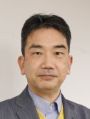
Director  Kazutoshi Kobayashi Professor, Dept. of Electronics
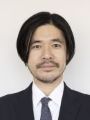
Deputy Director  Michihiro Shintani Professor, Dept. of Electronics
Steering committee Nobukazu Takai Professor, Dept. of Electronics
Steering committee Masashi Yamakawa Professor, Dept. of Mechanical Engineering
Steering committee Hajime Takayama Assistant Professor, Dept. of Electronics
Project Professor Hiroki Miyake  Kyoto Semiconductor Co-Creation Lab.
Cross appointment with MIRISE Technologies Corporation 
Project Professor MoonJae Jeong Kyoto Semiconductor Co-Creation Lab.
Project Associate Professor Chika Tanaka Kyoto Semiconductor Co-Creation Lab.
Cross appointment with Kioxia Corporation
 
Project Associate Professor Toshiyuki Inoue  Kyoto Semiconductor Co-Creation Lab.
Project Associate Professor Shinichi Terasawa Kyoto Semiconductor Co-Creation Lab.
     
Senior Fellow Shigetaka Kumashiro Renesas Electronics Corporation
Senior Fellow Koji Nii TSMC Design Technology Japan, Inc.
Senior Fellow  Chikasuke Kodama Kioxia Corporation
Staff Hisao Kanzaki  Moonshot Coordinator
Staff Yoshihiro Hirota Program Coordinator, Kyoto Semiconductor Co-Creation Lab.
Staff Shigeru Yamamoto LSI Design Specialist
Staff Yumiko Shimakurta Moonshot Project Promotion Office Profession
Staff Miwa Teramoto Moonshot Project Promotion Office Profession


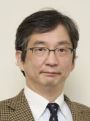
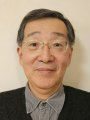
Professor
Kazutoshi Kobayashi
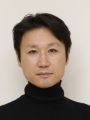
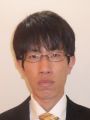
Professor
Michihiro Shintan
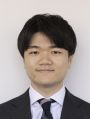
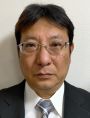
Professor
Nobukazu Takai
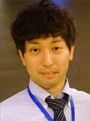
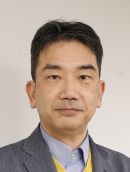
Professor
Masashi Yamakawa
Assistant Professor
Hajime Takayama
 
Project Professor
Hiroki Miyake
Project Professor
MoonJae Jeong
Project Associate Professor
Toshiyuki Inoue
Project Associate Professor
Chika Tanaka
Project Associate Professor
Shinichi Terasawa


 To top of this page

Output

The reports of Kyoto Lab for a Greener Future on FY2024: Here
The reports of Kyoto Lab for a Greener Future on FY2023: Here

The reports of Kyoto Lab for a Greener Future on FY2022: Here
The reports of Green Innovation Lab from FY2019 to FY2021: Here
--------------------------------------------------------------------------------------
If you need the more reports, please look at the previous Lab. pages of Kyoto Lab for Greener Future.
概要報告書は こちら

Project


1.  "Moonshot Research and Development Project 6" promoted by Japan Science and Technology Agency (JST)
"Development of scalable highly integrated quantum error correction system"    Detail =>
Here
 
Project Manager: Kazutoshi Kobayashi, Director of Kyoto Semiconductor Co-creation Lab.
 
Moonshot Goal 6
Realization of a fault-tolerant universal quantum computer that will revolutionize economy, industry, and security by 2050
.
  Outline:
 This research and development project aims to realize an agile error correction system that supports a wide range of qubit realization methods, from superconducting qubits to neutral atoms, and to realize a compact and low-power qubit controler for superconducting qubits
. The goal of this Moonshot Goal 6 by 2050 is the realization of a large-scale, fault-tolerant general-purpose quantum computer. This research and development project will conduct research and development on technologies that enable the realization of an error correction system and qubit control device capable of handling up to 1 million qubits by combining a communication network between higher-level, medium-scale qubits with top-level qubit hardware.
 

2. Semiconductor Human Resource Development
  Ministry of Education, Culture, Sports, Science and Technology:
enSET:Education Network for Semiconductor Technologies
Establishment of a collaborative hub for semiconductor talent development in the Kansai region
 
    Ministry of Economy, Trade and Industry:
Kansai Semiconductor Human Resource Development Liaison Council
     
     5 national and public universities in the Kansai region are collaborating on a project to cultivate talent that will make the future of semiconductors. ==> Link to The University of Osaka
    The 5 major universities in the Kansai region, with The University of Osaka as the base institution, Kyoto University, Kobe University, Osaka Metropolitan University, and Kyoto Institute of Technology, established a co-creation hub for semiconductor human resource development. By sharing each university's distinctive initiatives, we will leverage synergistic effects and develop inter-university practical education and training programs to expand the scale of collaboration to the entire region.
     
    This project will focus on the following areas:
    -
-
-
-
Technology for efficiently using electricity (power electronics)
Semiconductor circuit design (Circuit Design) <== Our Lab is in charge of
Technology for the integration of light and semiconductors (photonics)
Manufacturing technology (manufacturing technology)
   
   
    Kyoto Institute of Technology has been providing education on semiconductors in the Department of Electronic Systems Engineering. Furthermore, we will promote this project primarily within the Department of Electronic Systems Engineering, and then broadly expand it to other fields, contributing to the production of human resources who can work in the semiconductor industry, as required by the industry. ==> Click here for our university's press release.
 
    Implementation details of our university
    1.Provision of FPGA Circuit Design Lecture to other universities
  
Scheduled instructors: Prof. K. Kobayashi, Prof. N. Takai, Prof. M. Shintani and Project Associate Prof. S. Terasawa ==> Web Shillabas

Kyoto University students can attend classes at the university or remotely. The University of Osaka, Kobe University, and Osaka Metropolitan University students can attend remotely. Employees of private companies can also attend.

      2.Specific implementation details (Under planning)
  ・ Controlling a Single Device with FPGA
      ---- 4 class periods x 4 weeks (2 credits) or 4 class periods x 2 weeks (1 credit)
   - Contents
     Circuit design + simulation with TincarCAD
     Electronic circuit board (PCB) design with KiCAD
     Control signal generation using FPGA
     Soldering the PCB and connecting the FPGA board for control
  ・  FPGA design using SystemVerilog (Beginner) ---- 4 class periods x 1 week
   - Same content as VDEC F1 course
   - How to use an FPGA board, how to write SystemVerilog
  ・ FPGA design using SystemVerilog (Intermediate) ---- 4 class periods x 1 week
   - Same content as VDEC F2 course
   - Implementation of a slot machine using SystemVerilog
       
   
  -----------------------------------------------------------------------------------------------------------------------------------------------------
Details of our "Semiconductor Human Resource Development" program at this lab can be found here.

 To top of this page

Contact

Kyoto Semiconductor Co-creation Lab, Center for the Possible Futures
National University Corporation Kyoto Institute of Technology

Matsugasaki, Sakyo-ku, Kyoto
606-8585 JAPAN

Mail address: Kyosemi[at mark]kit.ac.jp


Copyright © 2022-2026 Kyoto Institute of Technology. All rights reserved